
 EN
EN
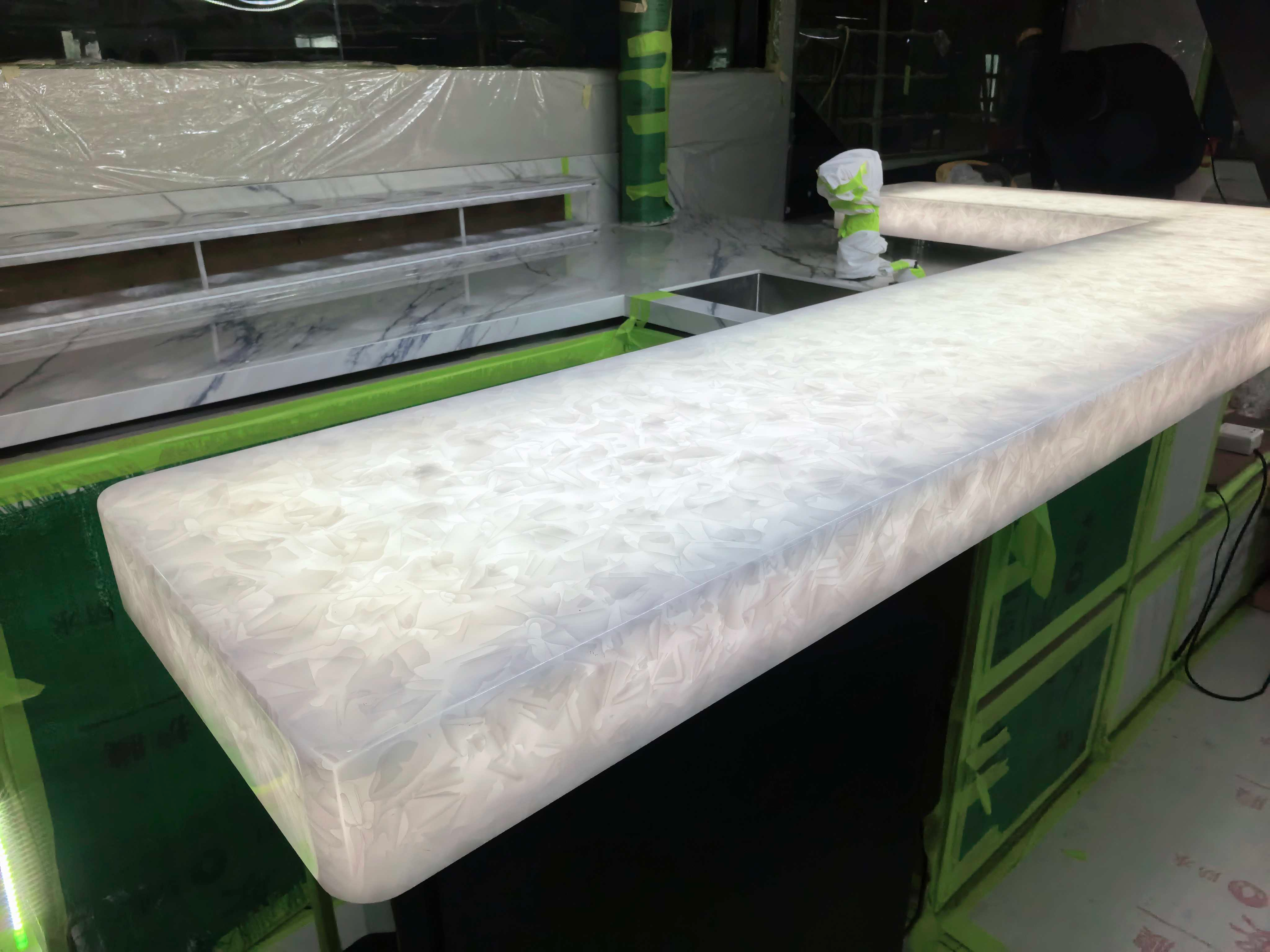
Standard and Custom Onyx Bar Thickness Options Explained
2cm vs. 3cm Onyx Bar: Balancing Strength, Visual Lightness, and Installation Feasibility
When deciding between 2cm and 3cm thick onyx bars, there's really no perfect answer since each thickness brings different pros and cons to the table. The thicker 3cm slabs stand up much better to daily wear and tear. They can handle all those glasses, bottles, and constant movement without bending or warping, which is why most busy bars go this route. But here's the catch - these heavier slabs tend to block more light. We're talking around 15-20% less translucency than thinner options, so that beautiful glowing effect isn't quite as striking. On the flip side, 2cm onyx lets in way more light, creating those amazing glowing effects that make onyx so special. Plus, they're lighter and easier to work with during installation. Just keep in mind that anything longer than four feet needs extra support underneath, like 19mm plywood or phenolic core boards to stop cracks from forming. Most restaurants and hotels stick with 3cm for their main bars because it lasts longer. The 2cm stuff works great for specialty areas where people won't be bumping into it all day long and when that magical lighting effect matters most.
When to Specify Custom Thicknesses (1.2cm–4cm) for Premium Onyx Bar Projects
Different thickness levels meet very specific design objectives in architecture and interior spaces. Take those super thin 1.2cm panels often found in upscale hotel bars and fancy lounges. When combined with carefully placed LED lighting, these panels can transmit around 90% of available light, creating those amazing floating glass effects that clients love. But there's a catch - these ultra-thin panels need full structural support along their entire width plus special epoxy reinforcement to prevent tiny cracks from forming during manufacturing and installation processes. On the other side of the spectrum, 4cm thick slabs have this museum quality look and incredible durability that makes them perfect for grand entrance bars in landmark buildings. However, working with these requires stronger cabinets underneath and special lifting gear for installation. For projects needing something in between (around 2.5 to 3.5cm thick), we find solutions for tricky engineering problems like fitting refrigeration units or handling unusual overhangs without compromising on appearance. The reality is that any thickness outside standard sizes means extra work for manufacturers. Custom tools are needed, curing takes longer, and everything must be calibrated precisely. That's why talking to experienced fabricators early in the project makes all the difference. Most of the time, production runs about 3 to 5 weeks longer than regular orders.
How Onyx Bar Thickness Impacts Real-World Performance
Load-Bearing Capacity and Durability in High-Traffic Commercial Onyx Bar Settings
The thickness of onyx really affects how much weight it can hold and how long it will last. Tests following ASTM C1353 standards show something interesting: 3cm thick onyx slabs can handle about 40% more weight sitting still compared to 2cm slabs before they start showing cracks. This matters a lot for bars where people sit all day, equipment gets moved around, and servers walk back and forth constantly. Why does this happen? Well, onyx has this special crystal structure. When it's thicker, impacts spread out across a bigger area instead of concentrating in one spot, which means less pressure builds up locally. But even with 3cm thickness, getting the base right underneath is super important. Steel supports need to line up exactly where the heavy stuff goes, like those coolers that sit under counters or the big fridge units. For spots that get extra stress, such as where things are mounted or at the ends of cantilevered sections, going with at least 3cm thickness makes sense if we want to avoid cracks forming after years of constant use.
Aesthetic Trade-offs: Thickness, Translucency, and Edge Detailing for Onyx Bar Design
The thickness of materials affects both how they perform and how they look in space. Thin slabs between 1.2 and 2 centimeters transmit the most light, making them great for those cool backlit effects we see in modern kitchens. But there's a catch - these thin pieces break easier, which limits what designers can do with edges and details. When going from 1.5cm to 2cm thick, the amount of light passing through actually falls by about 30%. This change isn't dramatic but it does make veins appear less defined and alters how deep the material looks visually. On the other hand, thicker slabs ranging from 3 to 4 centimeters aren't as bright, yet they allow for stunning waterfall edges, perfectly joined corners without visible seams, and sinks built right into countertops that give spaces that premium feel architects love. For anyone working on a project, matching slab thickness to what matters most for the design is absolutely critical.
- Lighting emphasis: Prioritize 1.2–2cm for radiant, ambient glow
- Edge expression: Choose ≥3cm for sculptural profiles and structural confidence
- Vein clarity + balance: 2.5cm often delivers the most harmonious interplay of translucency, detail, and durability
This calibrated decision directly informs guest experience—whether evoking warmth and intimacy or commanding presence and permanence.
Installation, Support, and Long-Term Integrity of Onyx Bar Countertops
Substrate, Reinforcement, and Seam Strategy Requirements by Onyx Bar Thickness
The thickness really determines how each part of the installation works, right down to how seams are handled. When working with 2cm materials, we need something solid underneath like at least 19mm plywood or phenolic core boards to stop any bending when weight is applied. Most top manufacturers include fiberglass mesh in their fabrication process these days, which cuts down on cracks spreading through the material by around three quarters. Thicker slabs between 3cm and 4cm are naturally more stable, but even then they still need steel frames around the edges if they're going to stand alone or stick out over supports. This helps keep those tiny fractures from forming due to vibrations. For joining pieces together, the approach changes based on thickness. With 2cm slabs, we typically use T-shaped joints positioned where there's less pressure, definitely avoiding spots under foot rails or drainage channels. Color matching epoxy makes everything look seamless. Thicker slabs can handle butt joints lined up with structural supports, especially helpful near drains or where appliances meet the surface. Since onyx reacts badly to temperature changes, gets damaged by water, and isn't great with physical stress, getting someone certified by the Natural Stone Institute to install it properly matters a lot no matter what thickness we're dealing with.
| Thickness | Substrate Requirement | Key Reinforcement | Seam Placement Strategy |
|---|---|---|---|
| 2cm | Mandatory rigid base (≥19mm plywood) | Embedded fiberglass mesh | Avoid cantilevered edges; use T-joints |
| 3cm-4cm | Optional for bar tops; required for overhangs | Perimeter steel framing | Strategically align with support beams |
FAQ
What is the difference between 2cm and 3cm onyx bars?
2cm onyx bars offer higher translucency, allowing more light to pass through, making them lighter and easier to install but requiring additional support for long spans. In contrast, 3cm bars are more durable, withstand daily wear, and are commonly used in main bars despite reducing light transmission by 15-20%.
When should custom onyx bar thicknesses be specified?
Custom onyx thicknesses, ranging from 1.2cm to 4cm, are specified based on project requirements, like creating unique lighting effects or addressing structural demands. Thinner panels are suited for upscale visual effects, while thicker slabs provide durability and a premium aesthetic.
How does onyx bar thickness impact performance?
The thickness of onyx impacts its load-bearing capability and durability. Thicker 3cm slabs can carry about 40% more weight than 2cm slabs, making them suitable for high-traffic areas. Thicker slabs also disperse impact across a larger area, reducing pressure buildup that can lead to cracks.
What are the best practices for installing onyx bars of different thicknesses?
Installation strategies vary largely by the thickness of the onyx. Thinner 2cm slabs require solid substrates like 19mm plywood, with T-shaped joints and embedded fiberglass mesh for support, whereas thicker 3cm-4cm slabs benefit from optional perimeter steel framing and well-aligned butt joints.