
 EN
EN
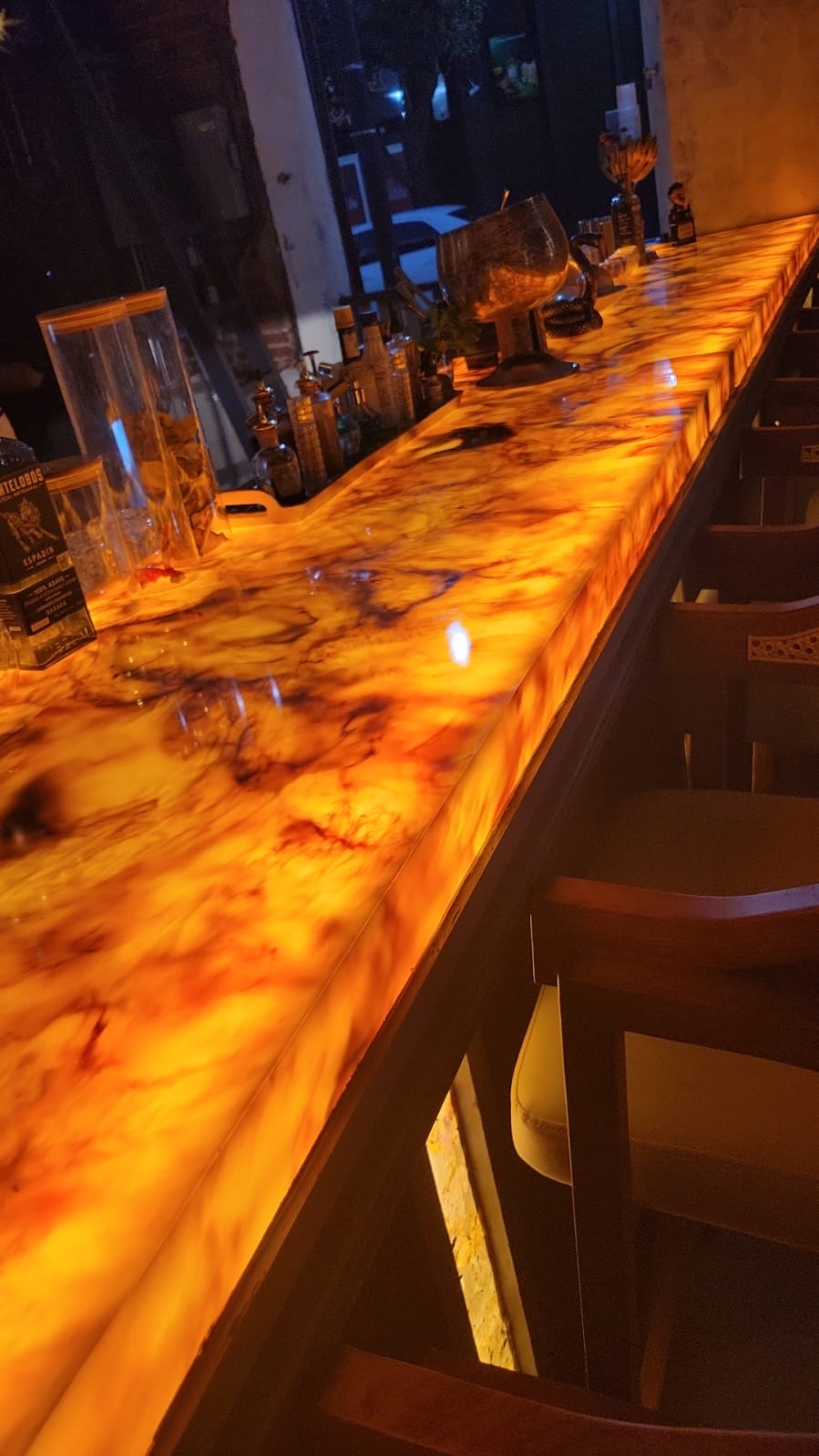
Visual Inspection: Spotting Defects and Authenticity Clues in Artificial Stone Countertops
Identifying Chips, Cracks, and Pitting Under Controlled Lighting
Look at stone slabs under those cool white 5000K LED lights from about a 45 degree angle for best results spotting surface issues. Most problems tend to hide along edges and corners according to recent industry data showing around three quarters of all manufacturing defects show up there. Run fingers gently over the seams between pieces to feel out tiny cracks that just won't show up visually. Real quality engineered stone will have small pits only where the natural veins meet up. If there are random craters scattered throughout, that usually means they used cheap resin during production. Any blemishes deeper than about a millimeter should be measured with digital calipers. Having these numbers on paper gives much stronger leverage when talking to suppliers about replacement or discounts.
Assessing Color and Pattern Consistency Across Slab Surfaces
Looking at how pigments spread out in different parts of a slab under actual sunlight gives valuable insights. Good quality quartz usually shows color differences of less than 5%, with veins that flow naturally from one area to another. When polymer composite materials look too uniform in color, it might mean there's been an overuse of fillers added during manufacturing. Check how patterns repeat themselves on real terrazzo style surfaces. Authentic ones tend to have distinct stone arrangements appearing roughly every 18 to 24 inches apart. Don't forget to ask about batch numbers when buying several countertop pieces together. This helps ensure colors match properly across all sections, which matters a lot for creating that continuous look throughout a space.
Evaluating Surface Finish Depth and Reflectivity as Material Integrity Indicators
To check how polished a surface really is, most professionals use a 60 degree gloss meter. Good quality finishes usually show readings between 85 and 95 Gloss Units. If the number drops below 70, there's probably something wrong with either the resin curing process or maybe the diamond abrasion wasn't done right. Another quick test involves shadows. Put a coin under a sample that's about 12mm thick. Clear, defined shadows mean the material has good density. Blurry edges tell us the core might be too porous or not compacted properly throughout. For water resistance testing, watch how water beads on the surface. Industry stats show around 23% of rejected products absorb water almost instantly, which typically means the sealing wasn't adequate when they were made.
Structural Evaluation: Distinguishing Premium Artificial Stone Countertops from Imitations
Detecting Inconsistent Seams and Surface Uniformity Anomalies
Check out how the seams look when light hits them at different angles. Good quality countertops have joints so subtle they're hard to spot, with textures and colors that blend smoothly together. When there are obvious seams or sudden changes in pattern, that usually means either bad workmanship or cheap materials were used. Feel along the surface too - any little bumps or dips? These kinds of irregularities typically come from poor compaction during manufacturing and can make the countertop more prone to cracking over time. Quality stone slabs stay pretty consistent in thickness, usually varying no more than half a millimeter, and their edges line up just right. Getting these details right is what keeps countertops looking great and standing strong for years down the road.
Recognizing Repetitive Patterns That Signal Low-Grade Mass-Produced Quartz Countertops
Real quartz looks like natural stone because it has random patterns that don't repeat themselves. When we see the same veins showing up again and again, or mineral clusters that look like mirror images, or speckles spread out exactly the same way on different slabs, that's usually a sign of factory templates being used. These are often cheaper products made in bulk. High quality quartz uses special mixing techniques so every single slab ends up looking unique. Colors tend to blend naturally and the overall appearance flows in an organic way. If someone sees a slab with patterns that seem too regular or predictable, they should probably walk away from it. Such slabs typically have lower visual appeal and worse construction underneath, with uneven mixtures of quartz and resin throughout.
Physical Testing: Validating Density, Porosity, and Core Composition of Countertop Slabs
Porosity Test and Tap-Response Acoustics for Density Verification
To check water absorption, put three drops of 0.5mL each onto clean dry spots on the surface and watch how long it takes for them to sink in. Good quality slabs should keep water from being absorbed for at least ten minutes or so, which matches what ASTM C97 says about having less than half a percent porosity to prevent stains. When testing density, just tap along the edge of the slab with a stainless steel rod. If there's a clear ringing sound that lasts a bit, then the material is dense and uniform throughout. But if it makes a dull thud instead, this usually means there are air pockets inside, parts where the material wasn't compacted properly, or areas with too much resin that can't be seen just by looking at the surface.
Weight-to-Thickness Ratio as a Practical Field Check for Solid Core Integrity
Take a sample that's about 30 by 30 centimeters in size and figure out its weight. Then divide that number by how thick it actually is, say around 20 millimeters or so. What we're really looking for here is the weight per unit thickness ratio. Now, if we're dealing with authentic 20mm thick quartz slabs, they generally fall somewhere between 14 to 16 kilograms. Any significant variation from this range, either going below or above by more than 10 percent, tends to be a warning sign something might be off. When samples come in lighter than expected, there's usually an excess of resin mixed in or maybe some lightweight filler material being used. On the flip side, when things are heavier than normal, manufacturers sometimes sneak in hidden ballast stuff like silica sand or tiny bits of recycled glass without telling anyone. This simple on-site test works pretty well for spotting problems with the core quality of these materials long before they ever get installed somewhere important.
Red Flags to Avoid: Critical Pitfalls When Evaluating Artificial Stone Countertops Pre-Order
When specs are fuzzy about things like what kind of resin they're using, how much quartz is actually there, or what fillers might be mixed in, that's usually a red flag for cutting corners on costs. Look for proof of quartz content between 90% and 95% in top quality slabs according to industry standards. If it drops below 85%, start asking questions. Marketing materials that just show generic pictures instead of actual samples from specific batches can hide problems like uneven coloring, fake looking veins, or patchy finishes. When suppliers won't let anyone see where their raw materials are stored or check out their quality control labs, that suggests they aren't being transparent about their processes. Vague responses when asked about warranty details for seams or how well the material holds up under UV light often mean the fine print has some pretty tight restrictions. And watch out if there's pushback against getting independent lab tests done for things like flexural strength or porosity levels. Skipping these tests means no real way to verify quality claims. All these issues can lead to cracked tiles at the joints, stains forming faster than expected, or losing warranty protection altogether. Taking time to thoroughly check everything before placing an order ends up saving money in the long run.
FAQ Section
How can I visually inspect artificial stone countertops?
Use cool white 5000K LED lights, inspect from a 45-degree angle, and feel the seams for hidden cracks.
What patterns should I look for in high-quality quartz slabs?
Look for natural blending in patterns and avoided repetitive or mirrored designs which indicate low quality.
How can porosity and density of slabs be tested?
Perform water absorption tests and tap-response acoustics to check for density and uniformity.
What is a weight-to-thickness ratio test and what does it indicate?
It helps confirm the core integrity of slabs by checking weight consistency against standard quartz weight measures.
Table of Contents
- Visual Inspection: Spotting Defects and Authenticity Clues in Artificial Stone Countertops
- Structural Evaluation: Distinguishing Premium Artificial Stone Countertops from Imitations
- Physical Testing: Validating Density, Porosity, and Core Composition of Countertop Slabs
- Red Flags to Avoid: Critical Pitfalls When Evaluating Artificial Stone Countertops Pre-Order
- FAQ Section