
 EN
EN
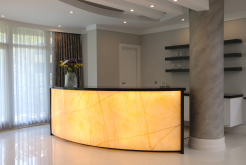
Architectural Performance: How Translucent Stone Enhances Building Functionality
Light-Diffusing Facades That Improve Daylight Autonomy Without Sacrificing Structural Integrity
Stone facades that let light through are great at bringing in natural illumination without sacrificing strength. The crystal-like structure scatters sunlight throughout buildings much better than regular glass does, giving spaces around 40 to 60 percent more daylight on their own according to Ponemon's research from 2023. Plus, these materials cut down on the need for artificial lights by roughly 30%. What makes them stand out compared to other options is how they handle strong winds. Their mineral makeup can take hits from gusts over 150 miles per hour without bending or breaking. Another big plus? They stop those annoying bright spots from forming while still letting people see outside clearly. This works really well in tall buildings too, where tests showed that walls made with this material stayed intact even after being exposed to weather conditions for ten years straight.
Thermal and Mechanical Resilience: ASTM-C1353 Compliance and Thermal Cycle Endurance
This translucent stone material passes the ASTM-C1353 standard for thermal stability when exposed to temperatures ranging from -40°F all the way up to 220°F. After going through over 500 freeze-thaw cycles, there's almost no sign of wear or damage, which makes it far more durable than traditional cladding materials. What really stands out is how well it handles temperature changes. With a thermal conductivity rating of just 1.2 W/mK and a thermal expansion coefficient around 8×10^-6/°C, this material works exceptionally well in double skin façade systems. These properties help cut down on HVAC energy consumption by somewhere between 15% and 22% when compared with standard metal panels. Lab tests have shown that even after enduring more than 10,000 thermal cycles, the flexural strength stays consistently above 18 MPa. That kind of performance speaks volumes about its ability to hold up in some of the harshest climate conditions imaginable.
| Property | Translucent Stone | Tempered Glass | Aluminum Composite |
|---|---|---|---|
| Thermal Conductivity | 1.2 W/mK | 1.05 W/mK | 160 W/mK |
| Expansion Coefficient | 8×10^-6/°C | 9×10^-6/°C | 24×10^-6/°C |
| Impact Resistance | 18 J | 7 J | 4 J |
Energy Efficiency and Sustainability: Translucent Stone as a High-Performance Building Material
Embodied Energy Reduction vs. Conventional Cladding Options (Aluminum, Glass, Concrete)
Translucent stone cuts down on embodied energy when compared to regular cladding materials. For example, making aluminum takes around 170 MJ per kilogram while glass needs between 15 and 25 MJ per kg. The cement part of concrete alone accounts for about 8% of all CO2 emissions worldwide. What makes translucent stone special is that it works with what nature already provides through its mineral makeup and doesn't need much processing. This means we save roughly 30 to 40% in energy during manufacturing. Another big plus is how long it lasts. These stones can stay intact for over 60 years, whereas most other options only last between 25 and 40 years. Because they don't need replacing as often, buildings using translucent stone end up consuming less energy throughout their entire lifespan. That's why architects who care about reducing carbon footprints are increasingly turning to this material for commercial projects.
HVAC Load Mitigation Through Integrated Double-Skin Façade Systems
Translucent stone works wonders when used in double skin facades, creating these thermal buffer zones that cut down on HVAC needs by somewhere around 15 to 30 percent based on various building simulation studies. What makes this material so special is how it lets through about 70 to 80 percent of visible light without letting all that infrared heat come inside. Standard glass walls actually tend to increase cooling loads by as much as 25 percent during warmer months. The air space between the stone layers helps with natural airflow too, keeping indoor temps stable even as seasons change from summer to winter. Architects working on net zero buildings are increasingly turning to this material because it just makes sense both environmentally and economically.
Brand-Centric Design: Leveraging Translucent Stone as a Strategic Building Material for Identity and Experience
Case Study: Apple Store Tokyo Ginza — Light, Materiality, and Consumer Engagement
The Apple store at Tokyo Ginza features translucent stone that does more than just cover walls; it actually becomes part of the brand itself by letting natural light filter through and creating that soft, clean look people associate with Apple products. The way the stone's natural patterns cast different shadows all day long makes the building facade feel alive somehow, changing as time passes. When customers walk through, they aren't just entering another retail outlet; they start interacting with the play of light on surfaces, the feel of materials under their fingers, and stories embedded in the architecture. What we get here is something much more than pretty design; it creates real emotional connections for shoppers while making Apple stand out from competitors through genuine architectural choices rather than just flashy gimmicks.
Specification and Implementation: Selecting and Installing Translucent Stone as a Reliable Building Material
When working with translucent stone, there are really three main things to consider: how stable the dimensions stay over time, whether light passes through consistently across the surface, and if it works well with whatever material it's going on top of. Getting the wall surface right is absolutely essential before starting anything else. Walls need to be level throughout, have no structural weaknesses, and pass proper moisture tests according to ASTM standards (specifically C1064) because otherwise we'll end up with either failed adhesion or weird optical distortions later on. For installing these stones, special MS polymer adhesives work best since they hold everything together without making the stone look cloudy. We also recommend adding LED lighting while the panels are being mounted rather than trying to retrofit it afterward which often leads to tiny cracks forming. Thermal expansion matching matters too. If there's even a half percent difference between our stone and neighboring materials, those seams will start separating after repeated temperature changes. That's why many professionals now prefer prefabricated units made by experienced fabricators. These ready-made assemblies eliminate most cutting mistakes at the job site and typically shorten installation time by around 40%. The result? Better lasting performance, visuals that stay true to design intentions, and systems that actually function as intended for years to come.
FAQ
What is the advantage of using translucent stone over traditional glass and aluminum composite?
Translucent stone provides superior daylight autonomy, structural integrity, and energy efficiency. It offers better thermal and mechanical resilience, helping reduce HVAC energy consumption significantly, while also cutting down on embodied energy in comparison to materials like aluminum and conventional glass.
How does translucent stone perform in extreme weather conditions?
This material is highly resilient, capable of withstanding temperature fluctuations from -40°F to 220°F and undergoing over 500 freeze-thaw cycles with minimal wear. Its impact resistance and flexibility remain unaffected even under harsh climate conditions.
What makes translucent stone a sustainable choice for buildings?
Translucent stone requires less energy during the manufacturing process, has a longer lifespan, and is effective in reducing overall building energy consumption through natural lighting and efficient thermal performance.
How does translucent stone contribute to brand identity and consumer experience in commercial buildings?
By integrating translucent stone into building design, brands like Apple can enhance their aesthetic appeal, create memorable consumer experiences, and align architectural elements with their branding strategies, resulting in a unique and engaging environment.
Table of Contents
- Architectural Performance: How Translucent Stone Enhances Building Functionality
- Energy Efficiency and Sustainability: Translucent Stone as a High-Performance Building Material
- Brand-Centric Design: Leveraging Translucent Stone as a Strategic Building Material for Identity and Experience
- Specification and Implementation: Selecting and Installing Translucent Stone as a Reliable Building Material
-
FAQ
- What is the advantage of using translucent stone over traditional glass and aluminum composite?
- How does translucent stone perform in extreme weather conditions?
- What makes translucent stone a sustainable choice for buildings?
- How does translucent stone contribute to brand identity and consumer experience in commercial buildings?