
 EN
EN
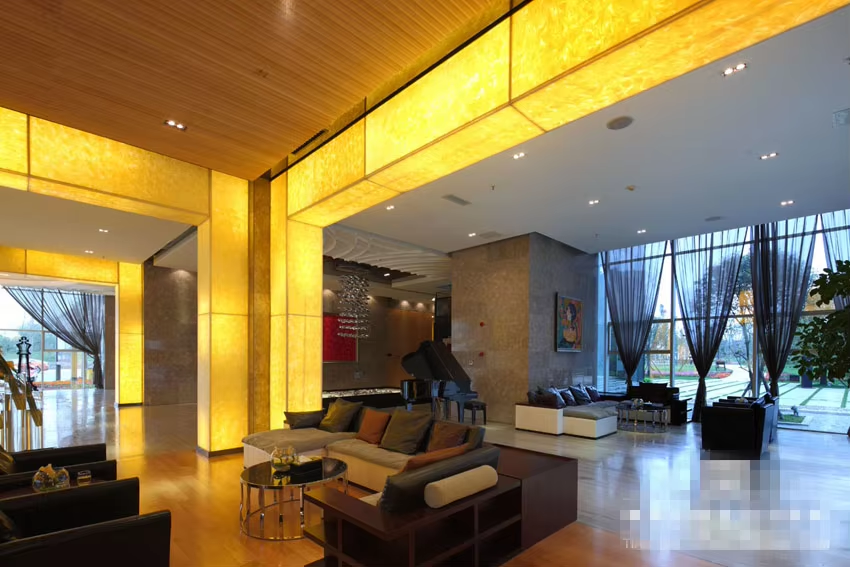
Upfront Material Costs: Faux Onyx Panel Pricing Versus Natural Onyx Slabs
Per-square-foot benchmarks and volume discount structures
Fake onyx panels usually cost between three and five dollars per square foot. Real onyx slabs are much pricier though, starting around five bucks but often going way beyond thirty dollars per square foot. Why? Well, natural onyx is pretty rare in quarries, takes a lot more work to process, and doesn't always give good yields either. For fake panels, manufacturers do have some volume discounts available. If someone orders over 500 square feet, they might get a discount somewhere between fifteen and twenty-five percent because these are made using standard machines and automated processes. Natural stone just doesn't play by those rules. Each slab has to be handled separately and cut individually, which adds about twenty to forty extra percent onto what the base material already costs for big commercial jobs. That's why most people end up going with the imitation stuff when budget matters.
Natural onyx price drivers: quarry scarcity, veining uniqueness, and slab yield variability
There are just twelve active quarries around the globe producing architectural grade onyx, which naturally makes it scarce and drives up the price anywhere from 200 to 400 percent higher than regular marble. No two slabs have exactly the same vein patterns either they're all unique. The really striking ones with bold contrasts can fetch an extra 70% premium in the market. Then there's the issue of waste during processing too. About half of what comes out of the quarry ends up discarded because of cracks or bad patterns. Contractors know this happens so they tend to order roughly 40% more material than needed just to be safe. All these extra costs get added right into construction projects' bottom lines.
Faux onyx panel consistency, repeatability, and factory-controlled scalability
The engineered panels keep their prices pretty stable, only fluctuating around 3% give or take, thanks to automated manufacturing that copies the same vein patterns over and over again no matter how many units are produced. Manufacturing plants get about 98% usage out of materials, which is almost twice what we see with natural stone at 50 to 60%, so there's basically no extra charge for waste anymore. With resin casting techniques that can scale up production by 300% without driving up costs, this contrasts sharply with natural onyx where delivery times stretch from 8 to 12 weeks when demand is high, and companies usually end up paying 15 to 25% more just to speed things up.
Installation Efficiency and Labor Savings with Faux Onyx Panels
Weight reduction, CNC compatibility, and simplified substrate requirements
Fake onyx panels are around 70% lighter than real stone slabs weighing just 14kg per square meter compared to 48kg for natural stone. This means buildings don't need extra structural support when installing these panels in tall buildings, old buildings being renovated, or anywhere else where weight matters. The consistent thickness and specially made composition allows for easy cutting with CNC machines, which results in about 18% less waste compared to those uneven natural stone slabs. Installation is also simpler thanks to mounting systems with interlocking parts and pre-drilled holes that let contractors attach the panels directly onto regular surfaces without needing special masonry skills. Because they're so light yet still perform well, designers can create things like curved bars, artistic wall features, and even backlit walls that would be impossible or extremely difficult to achieve with actual onyx due to weight limitations or complicated logistics.
Real-world commercial case: 42% faster install time and 31% lower labor cost
Looking at recent data from the hospitality sector in 2024, fake onyx installations take around 4 to 6 hours to complete compared to the 16 to 24 hours needed for real stone work, which means about 42% less time overall. One actual case study involved a hotel lobby where they installed these pre-wired backlit panels that just plug right in, saving them roughly 31% on labor costs. Getting rid of all that onsite sealing, polishing, and dealing with heavy materials cut down on equipment rentals too, along with other extra costs by about 27%. All this makes the fake panel option look pretty good when businesses need things done faster without breaking the bank.
Long-Term Value: Maintenance, Durability, and Lifecycle Cost of Faux Onyx Panels
Etch resistance, non-porous surface, and zero-seal maintenance advantage
Fake onyx panels solve one big problem with real stone: they don't get etched when exposed to acidic stuff like lemon juice or red wine because of their specially made non porous surface. The fact that liquids can't soak into them makes all the difference since natural onyx tends to absorb spills which leads to permanent stains and creates breeding grounds for bacteria. Regular stone needs sealing every three months at around $4 to $7 per square foot each year, but these synthetic panels just require simple cleaning with neutral pH products. Looking at actual data from commercial buildings, facilities using faux onyx completely avoid those costly resurfacing expenses and cut down on cleaning time by about four fifths over a five year period according to industry reports.
5-year TCO model: integrating maintenance, repair risk, and replacement probability
When evaluating total cost of ownership (TCO), faux onyx panels demonstrate clear financial advantages:
| Cost Factor | Natural Onyx | Faux Onyx Panels |
|---|---|---|
| Annual Maintenance | $6.50/sq ft | $1.20/sq ft |
| Repair Probability | 22% | 4% |
| Replacement Risk | High | Low |
The 5-year TCO model reveals 63% lower lifecycle expenses for faux onyx panels—driven by near-zero maintenance, minimal damage susceptibility, and consistent performance without degradation, especially valuable in high-traffic commercial environments.
Design Flexibility and Project Risk Mitigation with Faux Onyx Panels
Faux onyx panels offer amazing design flexibility, making it possible to create smooth curves and intricate shapes that would be impossible with regular natural stone. This matters a lot for things like fancy bar fronts, elevator areas, and artistic architectural elements. The panels are much lighter than real stone, so there's no need for extra structural support. Plus they let light pass through evenly without those annoying bright spots. When it comes to installation, modular prefabricated panels cut down on time because they just snap together. Labor costs drop significantly too, maybe around 30% less than traditional stone work. What really stands out though is how factory production avoids all the headaches of working with natural stone. No more worrying about unexpected vein patterns or inconsistent slab yields where sometimes up to half the premium material gets wasted. And forget about waiting months for quarry shipments that always seem to delay projects. With these faux panels, designers can maintain their original vision throughout the entire project without running into budget issues caused by missing materials or mismatched aesthetics.
FAQ
What are the cost benefits of using faux onyx panels over natural onyx slabs?
Faux onyx panels are significantly more affordable, ranging from $3 to $5 per square foot compared to natural onyx, which can exceed $30 per square foot. Volume discounts and lower processing costs also make faux onyx a budget-friendly option.
How does the weight of faux onyx panels compare to natural onyx slabs?
Faux onyx panels are about 70% lighter than natural stone slabs. This makes them easier to install and reduces the need for additional structural support in buildings.
Are faux onyx panels easier to install than natural stone slabs?
Yes, faux onyx panels are easier to install as they are lighter and come with interlocking systems and pre-drilled holes, simplifying the process and reducing labor costs significantly.
Do faux onyx panels require maintenance like natural stone slabs?
No, faux onyx panels do not require sealing and are resistant to etching from acidic substances. They only need simple cleaning with neutral pH products.
What makes faux onyx panels more suitable for design flexibility?
Faux onyx panels allow for smoother curves and intricate designs without the complications of heavy weight or structural support, offering more creative freedom in design projects.
Table of Contents
- Upfront Material Costs: Faux Onyx Panel Pricing Versus Natural Onyx Slabs
- Installation Efficiency and Labor Savings with Faux Onyx Panels
- Long-Term Value: Maintenance, Durability, and Lifecycle Cost of Faux Onyx Panels
- Design Flexibility and Project Risk Mitigation with Faux Onyx Panels
-
FAQ
- What are the cost benefits of using faux onyx panels over natural onyx slabs?
- How does the weight of faux onyx panels compare to natural onyx slabs?
- Are faux onyx panels easier to install than natural stone slabs?
- Do faux onyx panels require maintenance like natural stone slabs?
- What makes faux onyx panels more suitable for design flexibility?