
 EN
EN
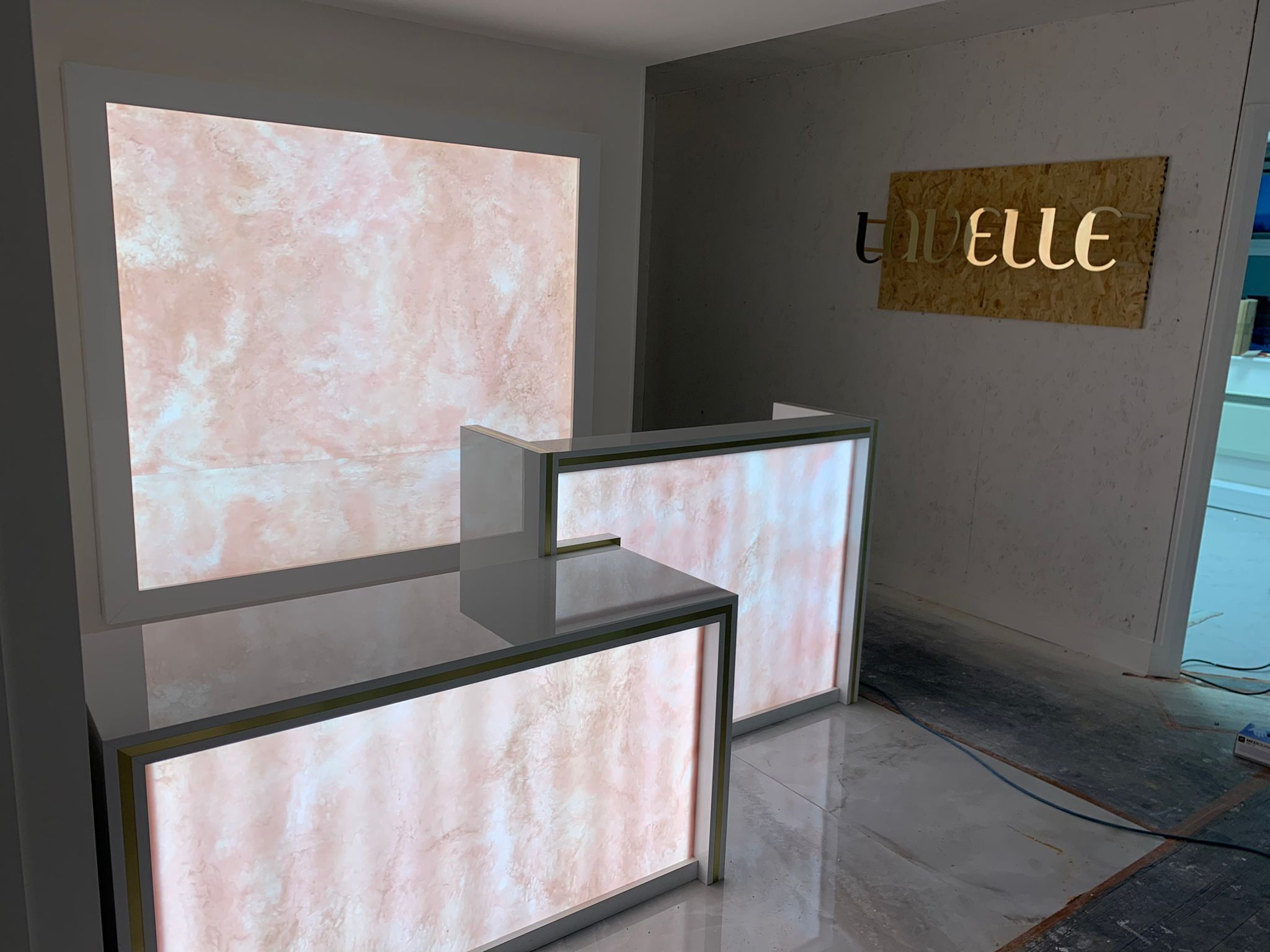
What Is Faux Onyx Panel and Where Is It Used?
Definition and Composition of Faux Onyx Panel
Faux onyx panels come as engineered surfaces crafted from a mix of resins, polymers, and minerals that look pretty much like real onyx. They replicate those beautiful translucent veins and natural patterns we see in genuine stone. These panels usually range between 3 to 12 millimeters thick, making them light enough for most installations while maintaining consistent colors throughout. Working with them is actually easier than dealing with actual quarry stone too. Manufacturers layer different materials during production to create depth and texture that looks surprisingly authentic. The result? A durable option that gets close to the beauty of natural onyx but doesn't have all those cracks and imperfections that make real stone so unpredictable for certain projects.
How Faux Onyx Panels Enhance Modern Interior Design Aesthetics
The translucent nature of these materials creates some really nice backlighting effects, which is why they work so well for accent walls, behind bars, and as space dividers throughout homes. These faux onyx panels come in all sorts of colors too, ranging from warm amber tones right through to rich green shades, fitting pretty much any interior style whether it's modern minimalism, gritty industrial looks, or something with lots of plants. A recent survey from Interior Design Magazine back in 2023 showed that people are using fake stone about 67% more often now just to give their spaces that upscale feel without breaking the bank. This trend basically makes expensive looking decor affordable for folks who want that designer vibe but don't have designer budgets.
Common Applications in Residential and Commercial Spaces
- Residential: Backlit bathroom vanities, fireplace cladding, and illuminated kitchen islands
- Commercial: Hotel lobby partitions, boutique retail displays, and corporate accent walls
- Hybrid Spaces: Spa dividers, restaurant tabletops, and backlit conference room panels
Thanks to moisture resistance and UV stability, these panels perform well in high-traffic environments. Their modular format also reduces installation labor costs by 30–50% compared to natural stone slab projects.
Why Cost-Effectiveness Matters in Today’s Decorative Material Market
Growing Demand for Budget-Friendly Yet Stylish Home Improvement Solutions
Post-pandemic economic shifts have led 62% of homeowners to prioritize cost-effective materials like faux onyx panels, which deliver design flexibility at 40–60% lower material costs than natural stone (Home Improvement Trends Report 2023). Inflation and tighter renovation budgets are driving demand for visually rich alternatives that don’t compromise on style.
Sales Trends: Faux Stone Panels vs. Natural Onyx (2018–2023)
| Material | 2018 Market Share | 2023 Market Share | Price/Sq.Ft (Installed) |
|---|---|---|---|
| Faux onyx panels | 12% | 34% | $18–$25 |
| Natural onyx slabs | 28% | 15% | $55–$120 |
| Source: Global Surface Materials Analysis 2023 |
Over this period, faux stone sales grew by 180%, outpacing luxury materials. Digital printing advancements now allow faux onyx to replicate natural veining with over 90% accuracy, making it a credible option for both residential and commercial feature installations.
Shift in Consumer Behavior: Value-Driven Choices Over Prestige Materials
A 2023 survey revealed that 71% of designers specify faux onyx for projects requiring a “natural stone look” under $30/sq.ft. Clients increasingly favor:
- Lower lifetime costs (3% annual maintenance vs. 12% for natural onyx)
- Faster installation (2–3 days vs. 2+ weeks for slab work)
- Sustainability (0.7 lbs CO2/sq.ft vs. 5.2 lbs for quarried stone)
This shift reflects a broader market trend toward value-first decisions, where performance and environmental impact outweigh traditional prestige markers.
Faux Onyx vs. Natural Onyx: A True Cost and Performance Comparison
Upfront material costs: Faux onyx panel versus natural onyx slabs
Faux onyx panels cost $30–60 per square foot, significantly less than natural slabs, which range from $75–200 per square foot. This gap arises from the elimination of mining, heavy transportation, and complex finishing processes. For a 200 sq ft feature wall, choosing faux can save $6,000–12,000 upfront.
Installation and labor expenses compared
Weighing up to 90% less than natural stone, faux panels simplify handling and eliminate the need for structural reinforcements or specialized cutting tools. Contractors report 75% faster installation times, reducing labor costs—which often exceed material expenses in natural stone projects.
Durability, maintenance, and long-term savings
Faux onyx’s non-porous surface resists stains, etching, and moisture absorption, common vulnerabilities in natural stone. Annual maintenance averages $0.15–$0.30 per sq ft, compared to $1.20–$2.50 for natural onyx, resulting in substantial savings over a decade.
Sustainability and environmental impact of both materials
Faux panels generate 73% less CO2 per sq ft during production and avoid habitat destruction linked to quarrying. Premium products incorporate 40–60% recycled content, enhancing their eco-profile.
Aesthetic realism: Is faux onyx indistinguishable from natural stone today?
Modern resin infusion techniques achieve 92% visual accuracy in replicating natural onyx’s translucency and veining. In controlled evaluations, 84% of design professionals couldn’t consistently differentiate faux panels in backlit settings—proof of significant manufacturing progress.
Real-World Success: Faux Onyx Panels in Budget-Smart Projects
Luxury Hotel Lobby Renovation Achieving 40% Cost Reduction With Faux Onyx
One luxury hotel in Dubai managed to slash material expenses by around 40% when renovating their lobby area, thanks to the switch from real onyx to imitation panels. These lighter fake materials made installation much quicker too, cutting down the work time by roughly two thirds while still keeping that lavish look customers expect at top hotels. Looking across the hospitality sector, most interior designers are going this route these days. Recent surveys show something like 93% prefer these budget friendly options as long as they don't compromise on the luxurious feel guests associate with upscale accommodations.
Residential Bathroom Upgrade: Balancing Beauty and Budget
A recent kitchen remodel in Seattle saw homeowners cut their cladding expenses by nearly 80% when they went with faux onyx for their main bathroom walls. What makes this choice so smart? The material is completely waterproof and installs seamlessly, which means no more worrying about those pesky grout lines that tend to collect mold and need constant cleaning like with real stone. This kind of project is part of what we're seeing more often these days across residential renovations. Homeowners want something that looks high end but doesn't break the bank at around $200 to $400 per square foot for genuine onyx. Faux alternatives are making it possible to achieve that luxury look without spending an arm and a leg.
Commercial Office Design Using Faux Onyx for High-End Look Under Budget
A tech company based in Chicago recently gave their 12,000 square foot office space a complete overhaul, installing backlit faux onyx walls for reception areas and divider panels throughout the conference rooms. The total cost came out to around $28 per square foot, which is way cheaper than what they would have paid for real stone that typically runs over $150 per square foot. Instead of spending all that extra money on expensive materials, they invested in some pretty cool smart office tech. After people started working there regularly, they asked employees how they felt about the new space. Nearly nine out of ten workers said it looked like something from a luxury hotel, not some run-of-the-mill corporate building. So apparently, these fake materials aren't so bad after all when it comes to meeting design standards while saving companies between 30 to 50 percent compared to traditional options.
The Future of Faux Onyx: Technology and Trends Driving Value
Advances in Resin and Polymer Technology Improving Durability and Realism
The latest resin formulas from 2023 let fake onyx mimic around 90 percent of real stone when it comes to how light bends through them, plus they're twice as resistant to scratches. Manufacturers are adding recycled plastics and special UV protection stuff to these panels too, which keeps colors looking fresh for over 15 years. That solves a big problem many people have with fading materials, something survey data shows affects nearly 6 out of 10 homeowners. What's really impressive is how these new techniques copy the natural patterns found in genuine onyx down to tiny details smaller than a millimeter, making it much harder to tell apart from the real deal at first glance.
3D Printing and Digital Texturing Closing the Visual Gap
The latest high resolution 3D printing tech can produce textures down to about 0.2 microns, which represents roughly a fourfold jump in quality compared to what was possible back in 2020. According to research published in the 2024 Material Perception Study, around eight out of ten people couldn't tell the difference between these fancy imitation stone panels and actual natural stone when tested under normal room lighting conditions. These days manufacturers are using laser etching techniques along with special nano textured coatings to recreate that authentic coolness and texture we associate with real stone surfaces. This advancement finally removes one last obstacle preventing widespread acceptance of synthetic alternatives in construction projects.
Market Outlook: Growth Forecast for Premium Faux Onyx Panels Through 2030
Premium faux onyx looks set to expand at around 8.7% compound annual growth rate until 2030, which beats out natural stone's paltry 1.2% according to the Global Surface Materials Report from 2024. Why? Well, money matters first. Faux options give similar looks for just about 34% of what real onyx costs when installed. Sustainability plays a big role too. A lot of architects these days prefer specifying faux materials for LEED certified projects since they cut down carbon footprints by roughly 40%. Looking ahead, Asia Pacific regions should account for nearly half (about 52%) of worldwide demand by 2028. Rapid city development there combined with stricter environmental regulations explains much of this anticipated surge in interest.
FAQ Section
What are faux onyx panels made of?
Faux onyx panels are engineered surfaces made from a mix of resins, polymers, and minerals to mimic real onyx's appearance.
Why are faux onyx panels popular in interior design?
They are popular because they offer a luxurious feel with backlighting effects, and they come in a variety of colors to suit different styles, at a lower cost than real onyx.
How do faux onyx panels compare to natural onyx in terms of cost?
Faux onyx panels are significantly less expensive, costing $30–60 per square foot, compared to natural slabs which range from $75–200 per square foot.
What are the environmental benefits of faux onyx panels?
Faux panels generate 73% less CO2 during production and often incorporate recycled content, making them more sustainable than natural stone.
Are faux onyx panels durable?
Yes, they have a non-porous surface that resists stains and moisture, and they're more resistant to scratches than natural stone.
Table of Contents
- What Is Faux Onyx Panel and Where Is It Used?
- Why Cost-Effectiveness Matters in Today’s Decorative Material Market
- Faux Onyx vs. Natural Onyx: A True Cost and Performance Comparison
- Real-World Success: Faux Onyx Panels in Budget-Smart Projects
- The Future of Faux Onyx: Technology and Trends Driving Value
- FAQ Section